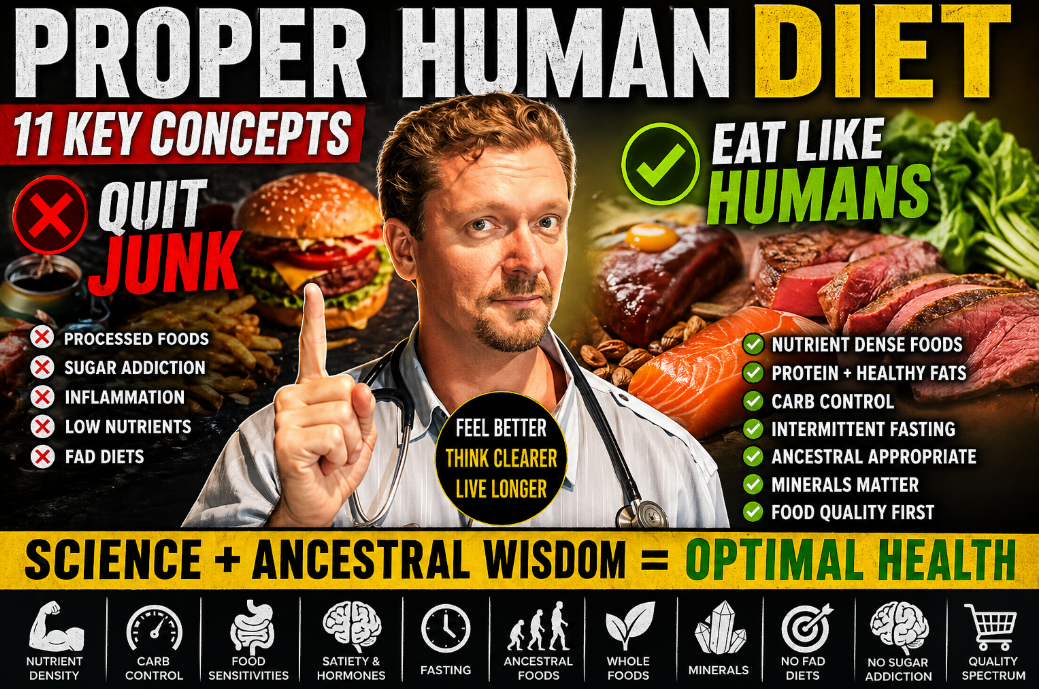
Proper Human Diet: 11 Key Concepts for Optimal Health, Energy, and Longevity
In today’s world of conflicting nutrition advice, trendy diets, and heavily processed food options, it can be difficult to determine what truly supports long-term health. Many popular dietary guidelines prioritize convenience and calorie counting over nutrient quality and biological appropriateness. As a result, people often struggle with chronic fatigue, weight gain, inflammation, and metabolic disorders.
The concept of a “Proper Human Diet” offers a different approach—one rooted in evolutionary biology, nutrient density, and simplicity. Instead of focusing on restrictive rules or short-term results, it emphasizes eating in a way that aligns with how humans have historically nourished themselves.
This article explores 11 key concepts that form the foundation of a proper human diet. These principles are designed to help you improve your energy levels, support metabolic health, reduce inflammation, and build a sustainable way of eating that works long term.
1. Nutrient Density: Prioritize What Your Body Actually Needs
One of the most important principles of a proper human diet is nutrient density. This means choosing foods that are rich in essential nutrients such as amino acids, fatty acids, vitamins, and minerals.
Not all calories are equal. A calorie from processed sugar does not provide the same nutritional value as a calorie from nutrient-dense foods like eggs, meat, or vegetables.
Organ meats, especially liver, are among the most nutrient-dense foods available. They contain high levels of vitamin A, B vitamins, iron, and other critical nutrients that are often lacking in modern diets.
By focusing on nutrient-dense foods, you can:
- Improve overall health
- Reduce cravings
- Support immune function
- Enhance energy levels
When your body gets what it needs, it functions more efficiently and requires less food overall.

2. Carbohydrate Control: Adjust Based on Your Needs
Contrary to popular belief, there is no essential carbohydrate required for human survival. While carbohydrates can be a useful energy source, they are not biologically necessary in the same way that proteins and fats are.
Think of carbohydrate intake as a “volume knob” rather than a fixed requirement. Some individuals may thrive on lower carbohydrate intake, especially those dealing with insulin resistance, obesity, or metabolic syndrome.
Others, such as athletes or highly active individuals, may benefit from moderate carbohydrate consumption.
Key points to consider:
- Reduce refined carbohydrates like sugar and white flour
- Adjust intake based on activity level and metabolic health
- Focus on whole-food carbohydrate sources if included
Controlling carbohydrate intake can help stabilize blood sugar levels, reduce cravings, and improve fat metabolism.
3. Identify and Avoid Food Sensitivities
Many people unknowingly consume foods that trigger inflammation or immune responses. Common culprits include gluten, lactose, lectins, oxalates, and phytates.
Food sensitivities can manifest in various ways:
- Digestive issues
- Skin problems
- Joint pain
- Brain fog
- Fatigue
Eliminating or reducing problematic foods can significantly improve overall well-being. An elimination diet can help identify specific triggers.
Pay attention to how your body responds to different foods. What works for one person may not work for another.
4. Satiety: Eat Foods That Keep You Full
A proper human diet prioritizes satiety, or the feeling of fullness and satisfaction after eating. Foods rich in protein and healthy fats are more effective at regulating hunger hormones than high-carbohydrate, processed foods.
When you feel satisfied, you are less likely to overeat or snack unnecessarily.
Protein plays a crucial role in:
- Muscle maintenance
- Hormone production
- Appetite control
Healthy fats provide sustained energy and help absorb fat-soluble vitamins.
By focusing on foods that promote satiety, you can naturally regulate your calorie intake without strict dieting.
5. Fasting: Give Your Body Time to Reset
Intermittent fasting is another key concept of a proper human diet. It involves cycling between periods of eating and fasting, typically ranging from 12 to 16 hours or more.
Fasting offers several benefits:
- Improved insulin sensitivity
- Enhanced fat burning
- Mental clarity
- Cellular repair processes such as autophagy
Humans did not evolve with constant access to food. Periods of fasting are natural and can support metabolic health.
Start gradually if you are new to fasting, and listen to your body.
6. Ancestral Appropriateness: Eat Like Humans Historically Did
Modern diets often include foods that did not exist in significant quantities throughout human history. A proper human diet emphasizes foods that our ancestors consumed regularly.
These include:
- Meat and organ meats
- Fish and seafood
- Eggs
- Natural fats
- Seasonal plant foods
Highly processed, industrial foods are a relatively recent addition to the human diet and are often associated with chronic disease.
Eating in alignment with our evolutionary biology can improve digestion, metabolism, and overall health.
7. Avoid Highly Processed Foods
Highly processed foods are typically engineered for taste, convenience, and shelf life—not nutrition. They often contain additives, preservatives, artificial flavors, and unhealthy fats.
These foods can:
- Disrupt hunger signals
- Increase inflammation
- Contribute to weight gain
- Promote addictive eating behaviors
A simple rule is to prioritize whole, single-ingredient foods. If a product has a long list of ingredients, especially ones you cannot pronounce, it is likely best avoided.
Cooking at home using fresh ingredients is one of the most effective ways to improve diet quality.
8. Ensure Adequate Mineral Intake
Modern agricultural practices have led to nutrient depletion in soil, which can result in lower mineral content in food.
Minerals such as magnesium, potassium, zinc, and sodium are essential for:
- Muscle function
- Nerve signaling
- Hydration balance
- Energy production
To support adequate mineral intake:
- Eat a variety of whole foods
- Include animal-based foods
- Consider supplementation if necessary
Paying attention to mineral intake can significantly impact overall health and performance.
9. Avoid Fad Diets
Many popular diets are driven by trends rather than science. Programs like MyPlate, certain calorie-restriction plans, or commercial weight-loss systems often fail to prioritize nutrient density.
Fad diets tend to:
- Focus on short-term results
- Ignore individual differences
- Promote unsustainable habits
Instead of following trends, focus on foundational principles that support long-term health.
A proper human diet is not about strict rules but about understanding what your body truly needs.
10. Address Sugar and Carbohydrate Addiction
Sugar and refined carbohydrates can be highly addictive. They stimulate reward pathways in the brain, leading to repeated cravings and overconsumption.
Breaking this cycle is essential for improving health.
Strategies include:
- Eliminating added sugars
- Reducing processed carbohydrates
- Increasing protein and fat intake
- Staying consistent with meals
Once you reduce dependence on sugar, your taste preferences and hunger signals will begin to normalize.
11. Food Quality Spectrum: Choose the Best You Can Afford
Not everyone has access to the highest-quality food at all times, but making better choices within your means is still valuable.
Consider factors such as:
- Grass-fed vs. conventional meat
- Wild-caught vs. farmed fish
- Organic vs. non-organic produce
While higher-quality options are ideal, consistency matters more than perfection.
Prioritize whole, nutrient-dense foods first, and upgrade quality as your budget allows.
Final Thoughts: Building a Sustainable Approach to Health
A proper human diet is not about perfection or rigid rules. It is about aligning your eating habits with your biology and focusing on what truly supports your health.
By applying these 11 key concepts, you can:
- Improve energy levels
- Reduce inflammation
- Support metabolic health
- Achieve sustainable weight management
- Enhance overall well-being
Start with small, manageable changes. Focus on nutrient-dense foods, reduce processed items, and pay attention to how your body responds.
Health is not built overnight, but with consistent effort and informed choices, you can create a diet that supports you for life.

