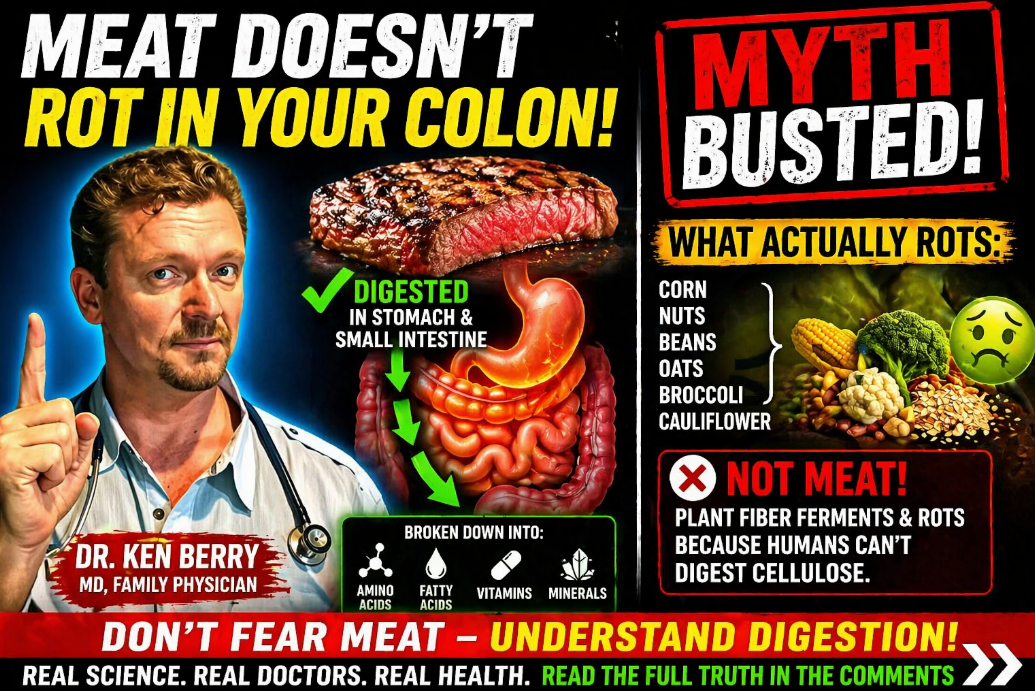
Does Meat Really “Rot” in Your Colon? Debunking a Popular Digestive Myth
The idea that meat “rots” in the human colon has been widely circulated across social media, documentaries, and even by some health influencers. It’s a claim that can sound alarming—after all, no one wants to imagine food decaying inside their body. But how accurate is this statement? Does meat truly linger in your digestive tract and rot, or is this simply a misunderstanding of how human digestion works?
In this comprehensive article, we’ll break down the science of digestion, examine where this myth comes from, and clarify what actually happens to the food you eat—especially meat—once it enters your body.
Understanding the Human Digestive System
To understand whether meat rots in the colon, it’s important to first understand how the digestive system functions.
The digestive process begins in the mouth, where chewing breaks food into smaller pieces and enzymes in saliva start the breakdown of carbohydrates. From there, food travels down the esophagus into the stomach.
The Role of the Stomach
The stomach plays a crucial role in digesting protein-rich foods like meat. It produces hydrochloric acid and digestive enzymes such as pepsin, which begin breaking down protein into smaller chains called peptides.
The acidic environment of the stomach is extremely powerful—strong enough to denature proteins and kill most bacteria. Meat does not sit in the stomach for days; instead, it is actively broken down and processed.
The Small Intestine: Where Most Digestion Happens
After leaving the stomach, partially digested food enters the small intestine. This is where the majority of digestion and nutrient absorption takes place.
In the small intestine:
- Proteins are broken down into amino acids.
- Fats are broken down into fatty acids and glycerol.
- Vitamins and minerals are absorbed into the bloodstream.
By the time food exits the small intestine, most digestible components of meat have already been fully processed and absorbed by the body.
What Actually Reaches the Colon?
The colon, or large intestine, is often misunderstood. Its primary function is not to digest food but to absorb water and electrolytes and to house beneficial bacteria that ferment certain undigested materials.
So what actually reaches the colon?
Mostly:
- Water
- Electrolytes
- Indigestible components of food
- Bacterial byproducts
Importantly, fully digested foods like meat do not typically reach the colon in their original form.
The Myth: Does Meat Rot in the Colon?
The claim that meat rots in the colon suggests that it remains undigested and decomposes over time, producing harmful toxins. However, this idea does not align with human physiology.
Why This Claim Is Misleading
- Efficient Protein Digestion
The human digestive system is highly efficient at breaking down animal proteins. By the time food reaches the colon, proteins from meat have already been converted into amino acids and absorbed. - Transit Time Is Limited
Food does not stay in the digestive tract indefinitely. The entire digestive process—from eating to elimination—typically takes between 24 and 72 hours, depending on various factors such as diet and metabolism. - No Evidence of Meat Accumulation
Clinical observations, including those from patients with ostomies (surgically created openings that allow direct observation of digestive output), show that meat is not found in the colon as intact or rotting material.
What Actually “Ferments” or “Breaks Down” in the Colon?
If meat doesn’t rot in the colon, what does?
The answer lies in indigestible plant fibers.
The Role of Fiber
Certain plant foods contain fiber that the human body cannot digest, particularly a type called cellulose. These fibers pass through the stomach and small intestine largely unchanged.
Examples include:
- Corn
- Nuts
- Beans
- Oats
- Broccoli
- Cauliflower
When these fibers reach the colon, they are fermented by gut bacteria. This fermentation process produces gases like methane, hydrogen, and carbon dioxide.
Is This “Rotting”?
Technically, this process is not “rotting” in the harmful sense often implied. It is a natural and beneficial fermentation process that supports gut health.
However, it is true that:
- Undigested plant material can remain visible in stool
- Fermentation can produce gas and bloating in some individuals
Evidence from Medical Observations
Healthcare professionals, including ostomy nurses and patients, provide valuable real-world insight into digestion.
Individuals with ostomies allow direct observation of what exits the digestive system before it reaches the colon. Consistently, these observations show:
- Meat is not present as undigested material
- Plant fibers are often visible
This aligns with scientific understanding: animal-based foods are highly digestible, while certain plant fibers are not.
Why the Myth Persists
Despite scientific evidence, the idea that meat rots in the colon continues to spread. There are several reasons for this:
1. Misinterpretation of Digestion
Many people assume that because meat is dense and protein-rich, it must take longer to digest or remain in the body. In reality, protein digestion is a well-understood and efficient process.
2. Influence of Dietary Ideologies
Some dietary movements promote plant-based eating by emphasizing potential negatives of animal products. While plant-based diets can offer benefits, certain claims—like meat rotting in the colon—are often exaggerated or unsupported.
3. Confusion Between Fermentation and Rotting
Fermentation in the colon is a normal process involving beneficial bacteria. However, it is sometimes inaccurately described as “rotting,” leading to confusion.
Is Eating Meat Harmful for Your Gut?
The discussion shouldn’t stop at debunking myths—it’s also important to understand the broader impact of meat on health.
Meat and Digestibility
Animal proteins are considered “complete proteins,” meaning they contain all essential amino acids. They are also highly bioavailable, meaning the body can efficiently absorb and use them.
Potential Concerns
While meat itself does not rot in the colon, there are other factors to consider:
- Highly processed meats may be linked to certain health risks
- Cooking methods (such as charring) can produce harmful compounds
- Balance in diet is key
The Importance of Individual Differences
Every person’s digestive system is unique. Some individuals may tolerate certain foods better than others. Factors like gut microbiome composition, enzyme production, and overall health play a role.
The Role of Fiber: Friend or Foe?
Fiber is often promoted as essential for digestive health—and in many cases, it is. However, not all fiber is the same.
Types of Fiber
- Soluble fiber dissolves in water and can support healthy cholesterol levels.
- Insoluble fiber adds bulk to stool and helps with bowel movement.
When Fiber Causes Issues
For some people, especially those with sensitive digestive systems:
- High-fiber foods can cause bloating and discomfort
- Certain fibers are harder to tolerate
This does not mean fiber is harmful, but rather that intake should be personalized.
Key Takeaways
Let’s summarize the main points:
- Meat does not rot in the colon. It is digested and absorbed in the stomach and small intestine.
- The colon primarily processes indigestible materials, especially plant fibers.
- Fermentation in the colon is a natural process carried out by gut bacteria.
- Observational and clinical evidence supports the fact that undigested plant matter—not meat—is what reaches the colon.
- Dietary myths often persist due to misunderstanding and selective messaging.
Practical Advice for Better Digestive Health
Instead of worrying about myths, focus on evidence-based habits that support your digestive system:
- Eat a balanced diet that includes protein, fats, and carbohydrates.
- Pay attention to how your body responds to different foods.
- Stay hydrated, as water plays a crucial role in digestion.
- Avoid excessive processed foods, regardless of diet type.
- Consult healthcare professionals for personalized advice.
Final Thoughts
The claim that meat rots in your colon is not supported by scientific evidence. Human digestion is a highly efficient system designed to break down and absorb nutrients from a wide variety of foods, including meat.
Understanding how your body actually works can help you make informed decisions about your diet without being influenced by misleading or oversimplified claims. Rather than focusing on fear-based messaging, it’s far more beneficial to rely on credible information and pay attention to your own body’s needs.
In the end, good health is not about following extreme beliefs—it’s about understanding the science and making choices that work best for you.

