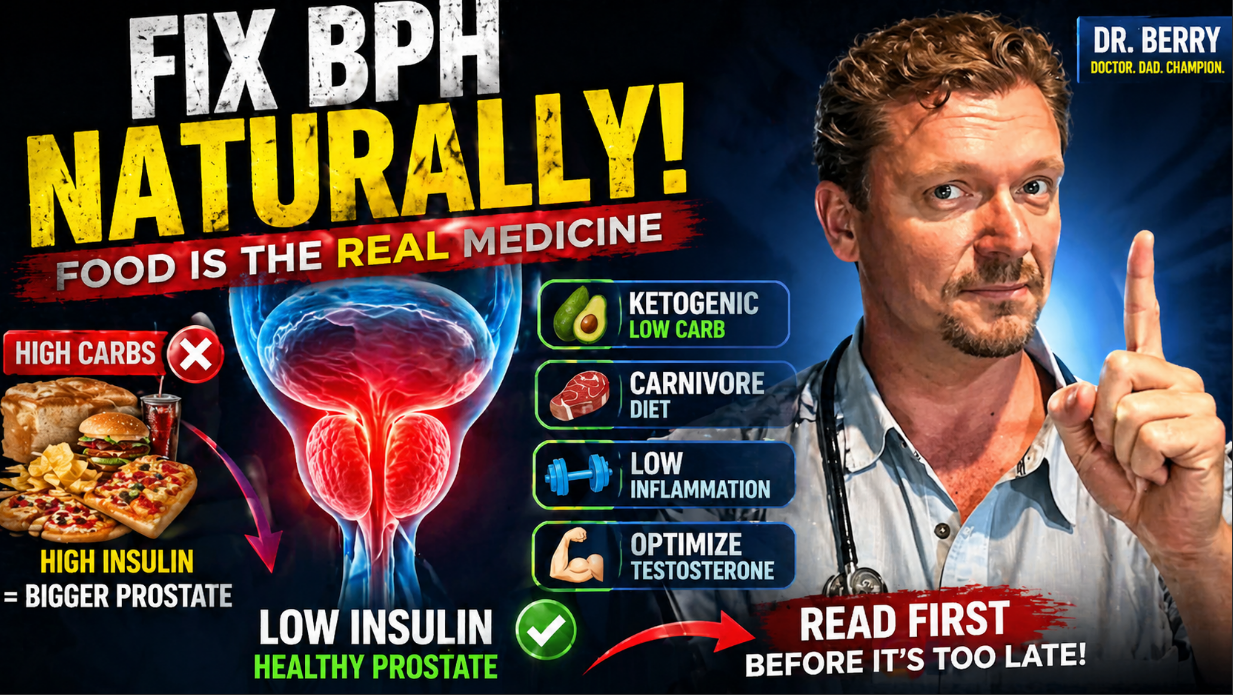
Diet and Prostate Health: How Nutrition, Insulin, Hormones, and Inflammation Influence BPH
Benign Prostatic Hyperplasia (BPH), commonly referred to as an enlarged prostate, is one of the most prevalent health concerns affecting aging men. While it is not cancerous, BPH can significantly impact quality of life by causing urinary symptoms such as frequent urination, weak urine flow, and nighttime awakenings. Traditionally, BPH has been associated with aging and hormonal changes, but emerging perspectives suggest that diet and metabolic health may play a more central role than previously believed.
In this article, we will explore the connection between diet and prostate health, focusing on insulin regulation, hormone balance, inflammation, and practical nutritional strategies that may help prevent or even reverse symptoms of BPH.
Understanding BPH: A Modern Health Concern
The prostate is a small gland located below the bladder and in front of the rectum. Its primary role is to produce seminal fluid. As men age, the prostate often enlarges, which can compress the urethra and interfere with normal urinary function.
BPH is extremely common, affecting approximately 50% of men over the age of 50 and up to 90% of men over 80. While aging is a major risk factor, it does not fully explain why some men develop severe symptoms while others do not.
Recent insights suggest that metabolic health, particularly insulin levels and chronic inflammation, may be key drivers of prostate enlargement.
The Link Between Diet and BPH
Modern diets, especially those high in refined carbohydrates and sugars, have dramatically altered human metabolism. These dietary patterns lead to chronically elevated blood sugar and insulin levels, which may contribute to a variety of health issues, including BPH.
High-Carbohydrate Diets and Insulin
When you consume carbohydrates, especially refined ones like sugar, white bread, and processed foods, your blood sugar rises. In response, your body releases insulin to help transport glucose into cells.
Over time, frequent spikes in blood sugar lead to chronically high insulin levels, a condition known as hyperinsulinemia. This state is closely linked to insulin resistance, metabolic syndrome, and obesity.
But what does this have to do with the prostate?
Insulin as a Growth Signal
Insulin is not just a blood sugar regulator; it is also a powerful growth hormone. Elevated insulin levels can stimulate cell proliferation and inhibit apoptosis, the natural process of cell death. This means that tissues exposed to high insulin levels may grow larger over time.
In the case of the prostate, chronic high insulin may contribute to abnormal tissue growth, leading to enlargement.

Insulin Control as a Strategy for Prostate Health
If high insulin is a contributing factor to BPH, then lowering insulin levels becomes a logical strategy for prevention and management.
Low-Carb and Ketogenic Diets
Low-carbohydrate diets, including ketogenic diets, aim to reduce carbohydrate intake significantly, forcing the body to use fat as its primary energy source. This shift leads to lower blood sugar levels and reduced insulin secretion.
Benefits of low-carb diets for prostate health may include:
- Reduced insulin levels
- Improved insulin sensitivity
- Decreased fat accumulation
- Lower systemic inflammation
Many individuals who adopt a low-carb or ketogenic lifestyle report improvements in metabolic health markers, which may indirectly support prostate health.
Carnivore Diet Perspective
Some advocates suggest that an even more restrictive approach, such as a carnivore diet consisting primarily of animal-based foods, may further reduce inflammation and stabilize insulin levels.
While scientific evidence on the carnivore diet is still limited, its proponents argue that eliminating plant-based antinutrients and processed foods may provide additional benefits for certain individuals.
However, it is important to approach extreme dietary changes cautiously and ideally under medical supervision.
Hormonal Balance: Testosterone and Estrogen
One of the most misunderstood aspects of prostate health is the role of testosterone.
The Myth of High Testosterone
For many years, it was believed that high testosterone levels contributed to prostate enlargement. This assumption led to concerns about testosterone replacement therapy (TRT) in aging men.
However, newer perspectives suggest that the issue is not high testosterone, but rather low testosterone relative to estrogen.
Testosterone Decline with Age
As men age, testosterone levels naturally decline. At the same time, body fat often increases, and fat tissue converts testosterone into estrogen through a process called aromatization.
This results in a hormonal imbalance characterized by:
- Lower testosterone levels
- Higher relative estrogen levels
This imbalance may contribute to prostate growth and BPH symptoms.
Optimizing Testosterone Naturally
Improving testosterone levels does not necessarily require medication. Lifestyle and dietary changes can play a significant role:
- Strength training and resistance exercise
- Adequate sleep
- Healthy fat intake (such as from meat, eggs, and certain oils)
- Weight loss, especially reducing visceral fat
- Reducing sugar and processed food intake
By improving metabolic health, many men can restore a healthier hormonal balance, which may support prostate health.
The Role of Inflammation in BPH
Chronic inflammation is a common underlying factor in many modern diseases, including heart disease, diabetes, and neurodegenerative conditions. Increasing evidence suggests that it also plays a role in prostate enlargement.
What Causes Chronic Inflammation?
Several lifestyle factors contribute to ongoing inflammation:
- Diets high in processed foods and sugars
- Excessive alcohol consumption
- Sedentary lifestyle
- Poor sleep quality
- Chronic stress
Inflammation and Prostate Tissue
Inflammation can lead to tissue damage and abnormal healing responses. In the prostate, this may result in increased cell proliferation and enlargement.
Reducing inflammation may therefore help slow or prevent the progression of BPH.
Anti-Inflammatory Lifestyle Strategies
To reduce systemic inflammation and support prostate health, consider the following approaches:
Dietary Changes
Focus on whole, nutrient-dense foods and eliminate inflammatory triggers:
- Avoid refined sugars and processed carbohydrates
- Reduce intake of industrial seed oils
- Limit ultra-processed foods
- Emphasize whole foods such as meat, fish, eggs, and low-carb vegetables
Physical Activity
Regular exercise has powerful anti-inflammatory effects. Both aerobic exercise and resistance training are beneficial.
Sleep Optimization
Poor sleep is strongly linked to increased inflammation and hormonal imbalance. Aim for 7 to 9 hours of quality sleep per night.
Stress Management
Chronic stress elevates cortisol levels, which can contribute to inflammation and metabolic dysfunction. Practices such as meditation, breathing exercises, and time outdoors can help.
Putting It All Together: A Comprehensive Approach
Rather than focusing on a single factor, it is helpful to view prostate health through a holistic lens. BPH may be influenced by a combination of metabolic, hormonal, and inflammatory factors, all of which are interconnected.
Key Principles for Prostate Health
- Lower Insulin Levels
Reduce carbohydrate intake and avoid frequent blood sugar spikes. - Improve Hormonal Balance
Support healthy testosterone levels through lifestyle changes. - Reduce Inflammation
Adopt an anti-inflammatory diet and lifestyle. - Maintain a Healthy Weight
Excess body fat contributes to both insulin resistance and hormonal imbalance. - Stay Physically Active
Exercise improves metabolic health and reduces inflammation.
Common Symptoms of BPH to Watch For
Understanding the symptoms of BPH can help you take action early. Common signs include:
- Frequent urination, especially at night
- Difficulty starting urination
- Weak urine stream
- Feeling of incomplete bladder emptying
- Urgency to urinate
If you experience these symptoms, it is important to consult a healthcare professional for proper evaluation and guidance.
Medical Treatments vs. Lifestyle Interventions
Conventional treatments for BPH often include medications such as alpha-blockers or 5-alpha reductase inhibitors. In more severe cases, surgical procedures may be recommended.
While these treatments can be effective, they often address symptoms rather than root causes.
Lifestyle interventions, particularly dietary changes, aim to address underlying metabolic issues that may contribute to prostate enlargement. For some individuals, these changes may reduce the need for medication or improve treatment outcomes.
Is Diet Alone Enough?
It is important to recognize that while diet and lifestyle can play a significant role, they are not a guaranteed cure for BPH.
Each individual is different, and factors such as genetics, age, and overall health also play a role. However, optimizing diet and metabolic health provides a strong foundation for overall well-being and may significantly improve symptoms.
Final Thoughts
The relationship between diet and prostate health is gaining increasing attention. Chronic high insulin levels, hormonal imbalances, and inflammation may all contribute to the development and progression of BPH.
By focusing on metabolic health through dietary changes such as low-carb or ketogenic approaches, supporting testosterone balance, and reducing inflammation, many men may be able to improve their prostate health naturally.
Rather than viewing BPH as an inevitable part of aging, it may be more accurate to see it as a condition influenced by lifestyle factors that can be modified.
Taking proactive steps today can lead to better long-term health outcomes and an improved quality of life.

